WHY PORTABLE APPLIANCES AND IEC LEADS MUST BE TESTED SEPARATELY
Key Compliance Takeaway: Under AS/NZS 3760 & AS/NZS 3012, a detachable IEC power cable and the host appliance it powers are legally classified as separate electrical assets. Testing or tagging them as a single combined unit leaves your business non-compliant and exposed to active shock hazards.
In this blog, Shock Busters breaks down the real-world compliance rules around portable appliances and detachable IEC leads – explaining why single-tag shortcuts fail safety audits, what happens during live 240V active testing, how to keep your workplace 100% compliant and answers other questions we regularly get asked on site.
When booking workplace Electrical Test and Tag inspections across New South Wales (NSW), Canberra / ACT, and South East Queensland (SEQ) (Electrical Contractor Licence # 1510173), site managers often ask why detachable power cords – such as IEC leads (standard computer power cables) – are tested and tagged as distinct items separate from the equipment they power.
Under Australian workplace safety standards, treating an appliance and its detachable power lead as a single unit during compliance testing is a direct breach of safety protocols.
Here is a detailed, factual breakdown of why separate testing is required under AS/NZS 3012 and AS/NZS 3760, what happens during a true Portable Appliance Tester (PAT) sequence, and why skipping essential procedures like Earth Leakage Testing leaves your business exposed.
1. COMPLIANCE REQUIREMENTS UNDER AS/NZS 3760 & AS/NZS 3012
The mandatory benchmarks for workplace electrical safety in Australia are AS/NZS 3760:2022 (In-service safety inspection and testing of electrical equipment) and AS/NZS 3012:2019 (Electrical installations – Construction and demolition sites).
Both standards explicitly define a detachable power supply cord (IEC lead) as an independent piece of portable electrical equipment.
- National Standard – Independent Asset Status: Every flexible cable and detachable lead set must be inspected and tested as an individual unit. Tagging the main unit without a separate tag on the power lead leaves the lead legally non-compliant.
- Interchangeability Risk: IEC leads are non-fixed, multi-use cords. While a desktop monitor, server, or medical device may remain stationary, its IEC lead can easily be unplugged, swapped, or moved to a higher-risk environment. Tagging the lead separately ensures its individual safety tracking remains valid wherever it is deployed.
- Distinct Construction Classes: A computer monitor or power supply unit may be classified as Class I or Class II (Double Insulated), whereas the IEC lead plugging into it is often a Class I (Earthed) component requiring specific earth bond continuity testing across its flat Australian 3-pin earth conductor.
- Laptop Power Supplies (2-Part Chargers): The 240V figure-8 or IEC cloverleaf lead running from the wall socket to the power supply unit must be tested independently from the transformer block itself. The detachable lead is a 240V mains asset, while the power supply unit converts that 240V input down to extra-low voltage (ELV) output. Under AS/NZS 3760:2022 (Section 2.1), both components are classified as separate electrical assets and require individual testing and tagging.
⚠️ The “Single-Tag” Shortcut: A Clear Red Flag of Poor Compliance
Our technicians regularly take over compliance management for new sites across NSW, the ACT, and SEQ only to find that previous test and tag providers left only a single tag attached – usually attached onto the detachable power lead while leaving the main equipment chassis completely untagged (or vice versa).
Under AS/NZS 3760:2022 (Clause 2.6), this is a direct compliance failure:
- The Standard Requirement: The standard mandates that both the detachable power supply cord and the host appliance are independent electrical assets. Each must undergo its own separate inspection procedure and carry its own distinct, durable compliance tag.
- What Single-Tagging Proves: When a site only has one tag on a two-part system, it is immediate proof that the previous provider did not disconnect the lead, did not perform an independent earth bond and polarity check on the lead, and did not run an independent insulation/leakage test on the host appliance.
- The Legal Exposure: If an inspector from SafeWork NSW, WorkSafe ACT, QLD Electrical Safety Office (ESO) or WorkSafe Queensland conducts a site audit, a single tag on a computer and lead setup fails compliance checks, leaving your business exposed to official non-compliance notices despite paying for a “service”.
Unsure If Your Site Is Compliant?
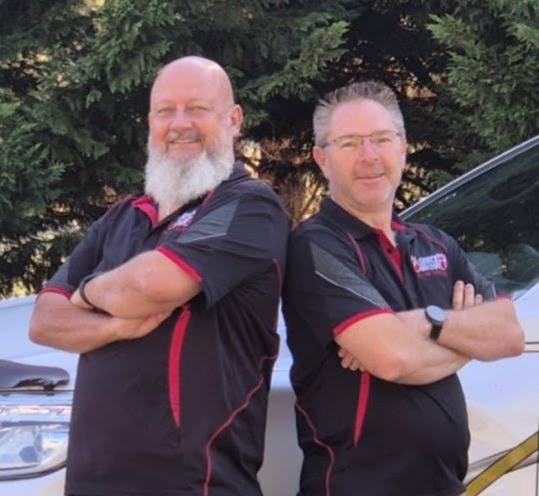
Speak directly with Grayden or Taylor to arrange a fast, trusted and certified workplace electrical Test and Tag inspection.
2. BREAKDOWN: WHAT LIVE ACTIVE PAT TESTING ACTUALLY DOES
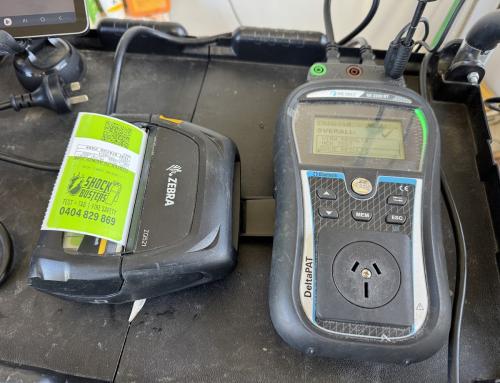
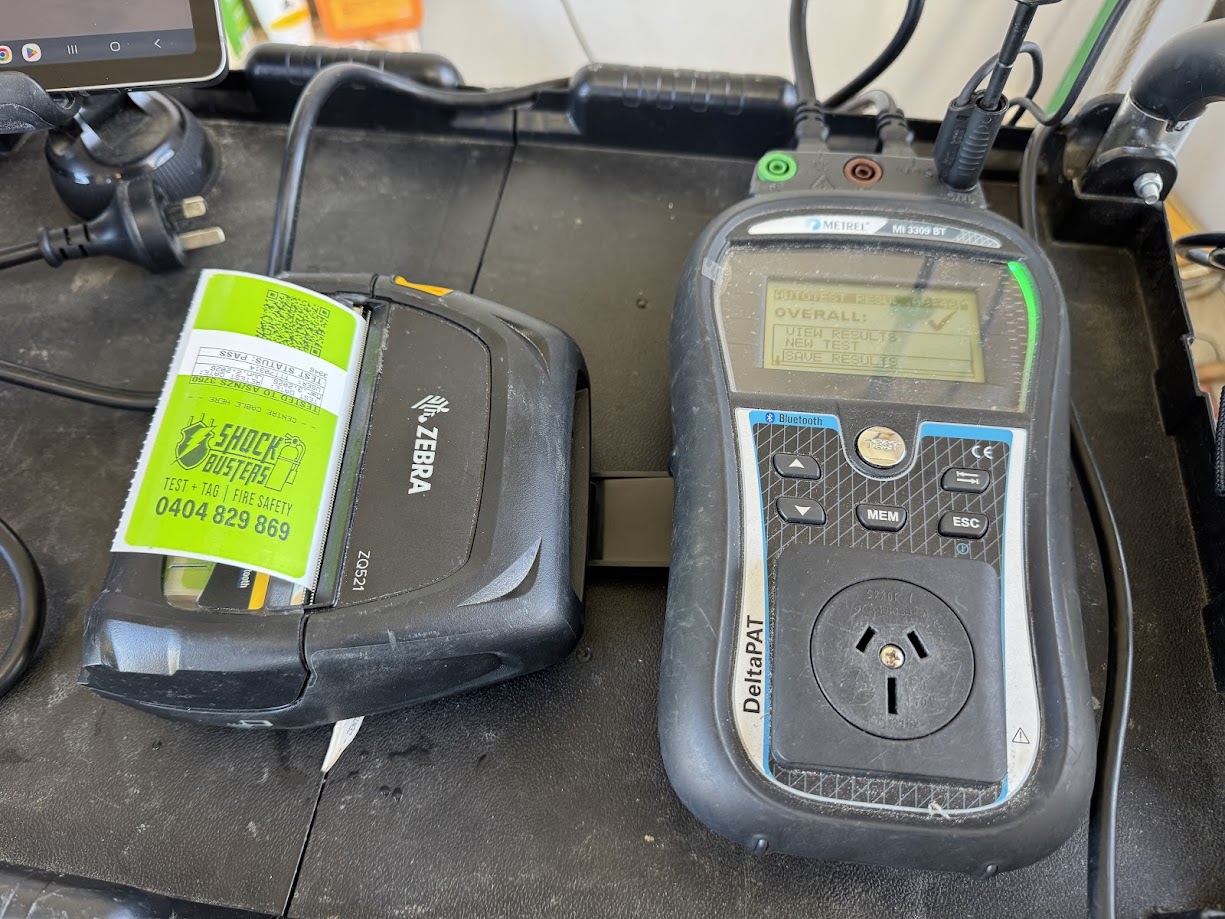
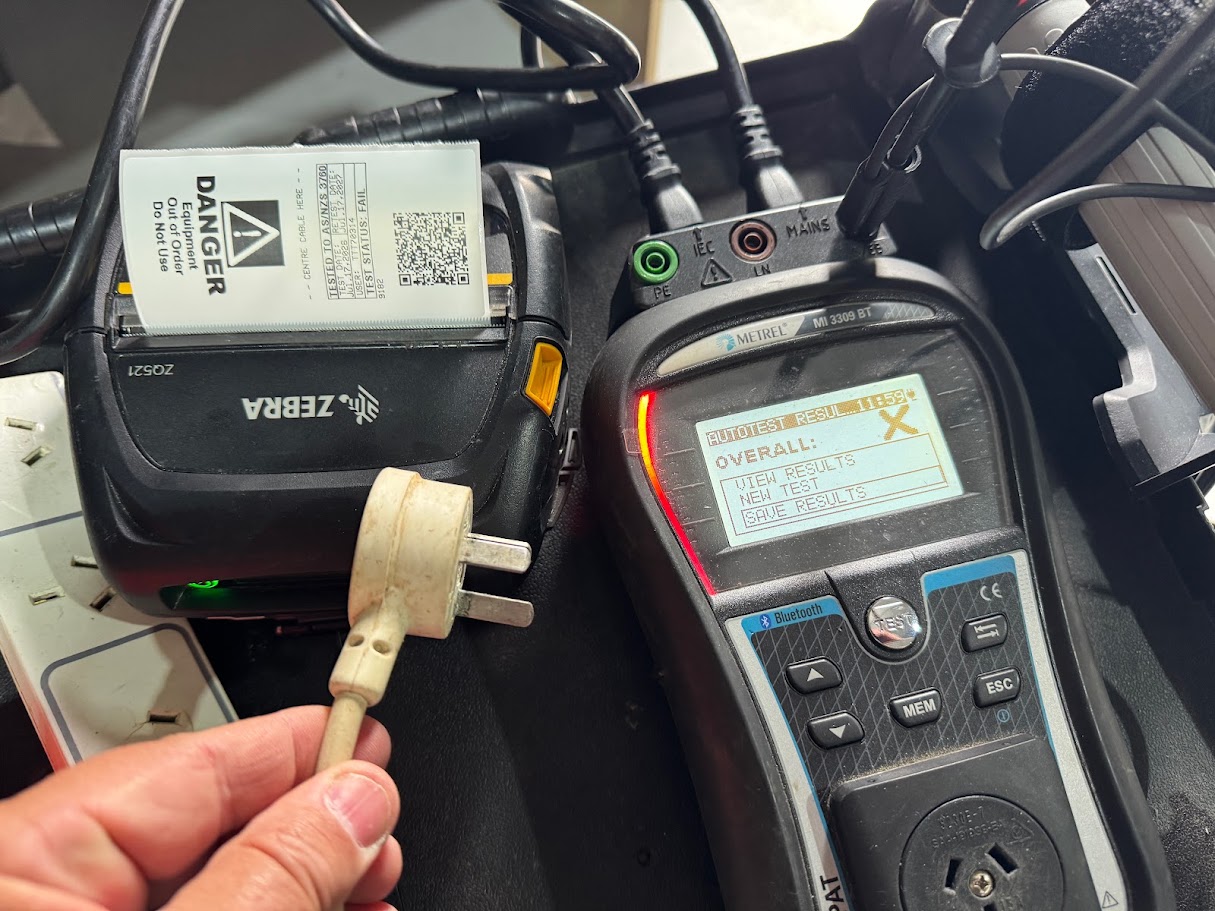
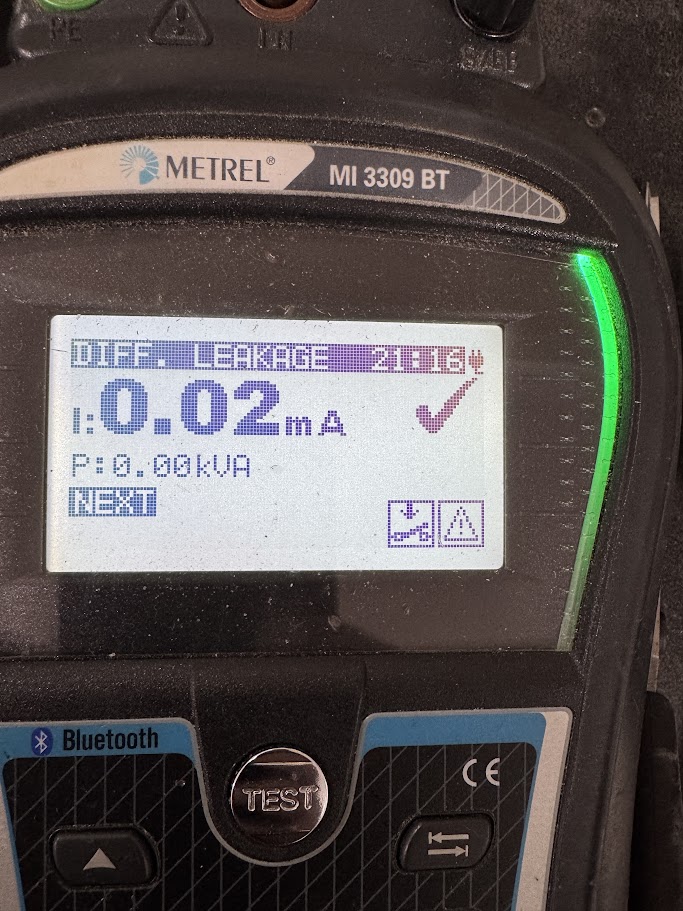
To understand why appliances and leads cannot be combined, it helps to look at the exact electrical tests performed when equipment undergoes live 240V active testing on a calibrated Portable Appliance Tester (PAT):
- Visual Inspection
- Earth Continuity Test (<0.5 Ω)
- Insulation Resistance (500V DC)
- Polarity Check
- Visual Inspection
- Earth Continuity Test
- Insulation Resistance
- Differential Leakage Test
- Visual & Casing Check
- Insulation Resistance
- Touch Leakage Test
- The Dedicated IEC Lead Test Routine: Because an IEC lead connects at both ends (plug to socket), the PAT unit runs a specialized routine: Earth Bond Continuity Test (applying a high-current test from 200mA to 10A checking that resistance is strictly under 0.5 Ω per AS/NZS 3760 Clause 2.4.1 across the flat Australian earth pin), 500V DC Insulation Resistance Test, and a full Polarity Check to ensure Active and Neutral lines are not crossed.
- ⚡ The Class I Appliance Test Routine (Earthed Equipment): Used for exposed conductive parts equipment (e.g., microwave ovens, desktop towers, kettles, bench machinery) featuring a standard Australian 3-pin plug with a flat vertical earth pin. Tests earth continuity from the earth pin to the metal chassis or exposed metal parts, insulation resistance, and live protective earth leakage current while running.
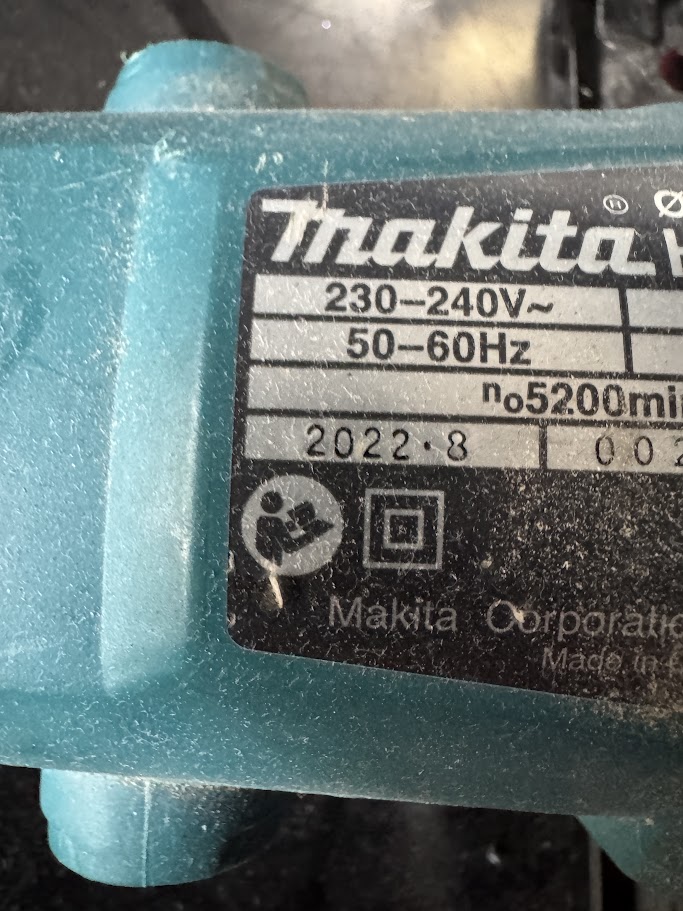
- The Class II Appliance Test Routine (Double Insulated): Used for plastic-cased tools, power supplies, and double-insulated electronics. These devices do not rely on an earth wire for safety and are identified by the official international Class II square-within-a-square symbol ( 回 ) printed on their compliance rating label. Involves detailed visual casing inspection, high-voltage insulation testing (500V DC), and touch leakage current checks.
Male Plug Face View: Shows Blue Neutral (N) on the left, Brown Active (A) on the right, and the Flat Earth Pin (E) at the bottom.
Identified on rating labels by the “square-within-a-square” symbol ( 回 ). Uses two insulation layers instead of an earth pin.
Compliance Rule: Portable tools and appliances in Australian workplaces must either utilize a 3-pin earthed plug (AS/NZS 3112) or carry the official Class II double-insulated symbol on their compliance rating label.
3. WHY LIVE 240V EARTH LEAKAGE TESTING MATTERS
Under AS/NZS 3760 (Clause 2.4.3.2), verifying electrical safety on appliances with soft-touch switches, internal relays, or electronic control boards requires a live Earth Leakage Current test, as the standard explicitly mandates: “If the equipment must be energised to close or operate a switching device in order to test the insulation, then the leakage current test in accordance with Appendix E shall be performed.
⚠️ The Industry Shortcut That Exposes Your Business
In the Test and Tag industry, high-volume providers sometimes attempt to shave time off site visits by avoiding plugging into 240V mains power.
To speed up testing, they rely exclusively on unpowered Insulation Resistance tests (500V DC) or handheld battery-driven “substitute leakage” modes (typically applying only ~40V AC).
While unpowered DC insulation tests are fully compliant for basic extension leads and simple mechanical tools, applying unpowered tests – or low-voltage substitute leakage modes – to modern electronically switched equipment creates critical compliance and safety gap.
Skipping this step creates critical safety risks such as:
- Incomplete Circuit Verification: Modern computers, power supplies, server racks, and soft-switched tools contain electronic switches that remain open when unpowered. A static DC insulation test cannot pass an open switch, leaving internal circuits and motor windings completely untested.
- Undetected Earth Leakage & Nuisance Trips: Appliances with internal insulation breakdown downstream of an electronic switch will pass an unpowered static test. Once plugged in and turned on by staff, current leaks to earth-tripping workplace RCDs, causing unexpected downtime, or creating touch-voltage shock hazards.
- Audit Failure Risks: Workplace Health and Safety inspectors (including SafeWork NSW and WHS Queensland) can review asset test registers during compliance audits and the full reports with test result details.
If electronically switched or Class II electronic equipment lacks recorded live leakage measurements per Appendix E, your site register can be deemed non-compliant under AS/NZS 3760.
The Shock Busters Standard: Shock Busters connects directly to live 240V mains power on-site to execute energized Earth Leakage Current and Touch Current testing on all electronically switched, IT, and commercial equipment per AS/NZS 3760 (Clause 2.4.3.2 & Appendix E).
We verify 100% of internal circuitry under actual operating load so your business receives genuine safety and audit-proof compliance results and reports.
4. TECHNICAL REASONS: HOW SEPARATE TESTING PREVENTS FALSE PASSES
⚠️ The Danger of Testing as One Item: Because power leads experience constant twisting, pinching, and foot traffic, they degrade far faster than the equipment they power. If tested while plugged into a machine, internal circuitry inside the appliance can mask a snapped ground wire or damaged outer sheath inside the lead – producing a false “PASS” on a lead that is actively unsafe.
An IEC lead’s primary safety mechanism is its protective earth conductor. When a technician tests an IEC lead independently using a high-current earth bond test, they verify the physical integrity of the internal copper wire from the 3-pin wall plug directly to the IEC socket end. If tested while attached to an appliance, internal circuitry or parallel earth paths inside the computer can mask a broken earth wire inside the cable, producing a false “PASS” reading on a damaged lead.
5. ADAPTERS, PIGGYBACK LEADS IN THE WORKPLACE
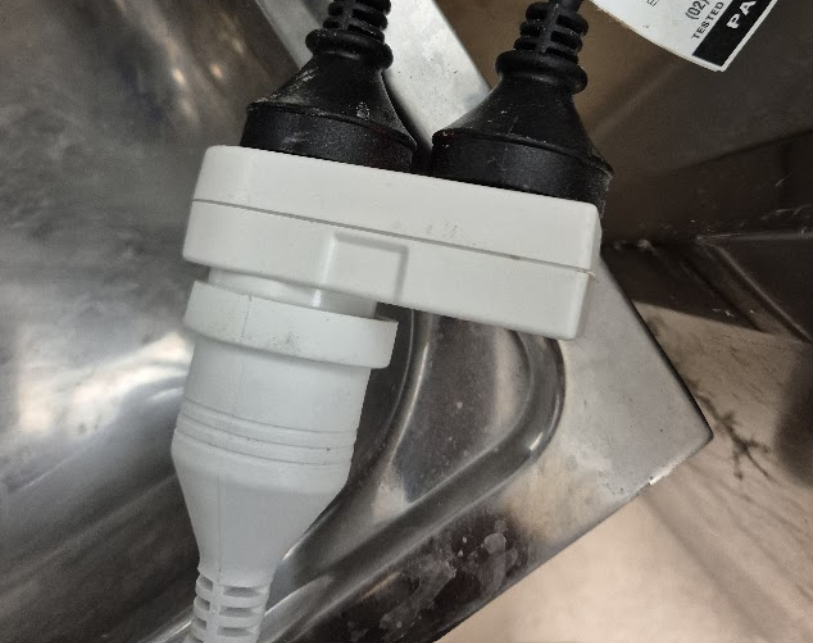
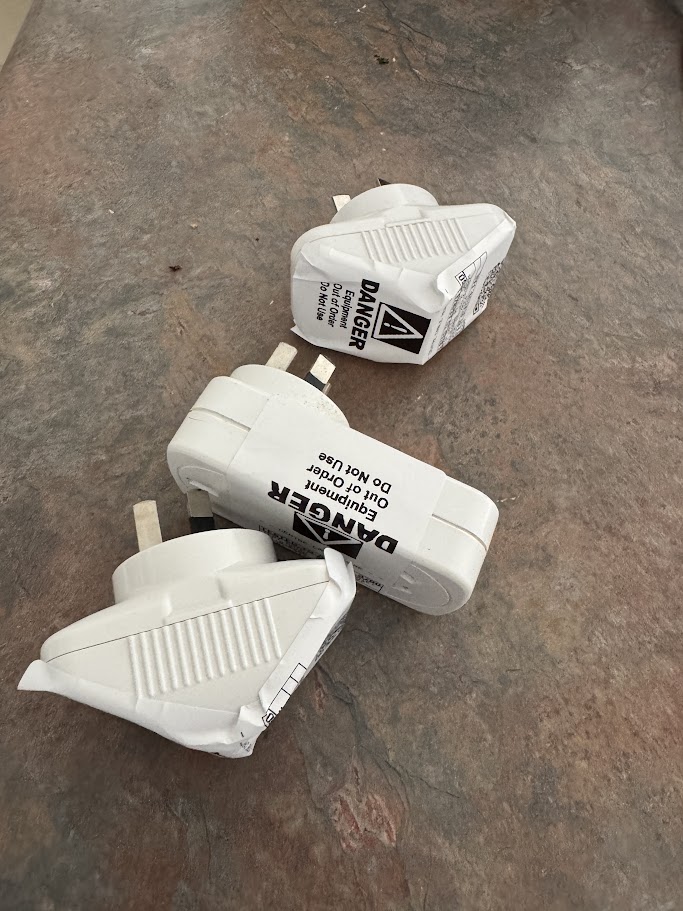
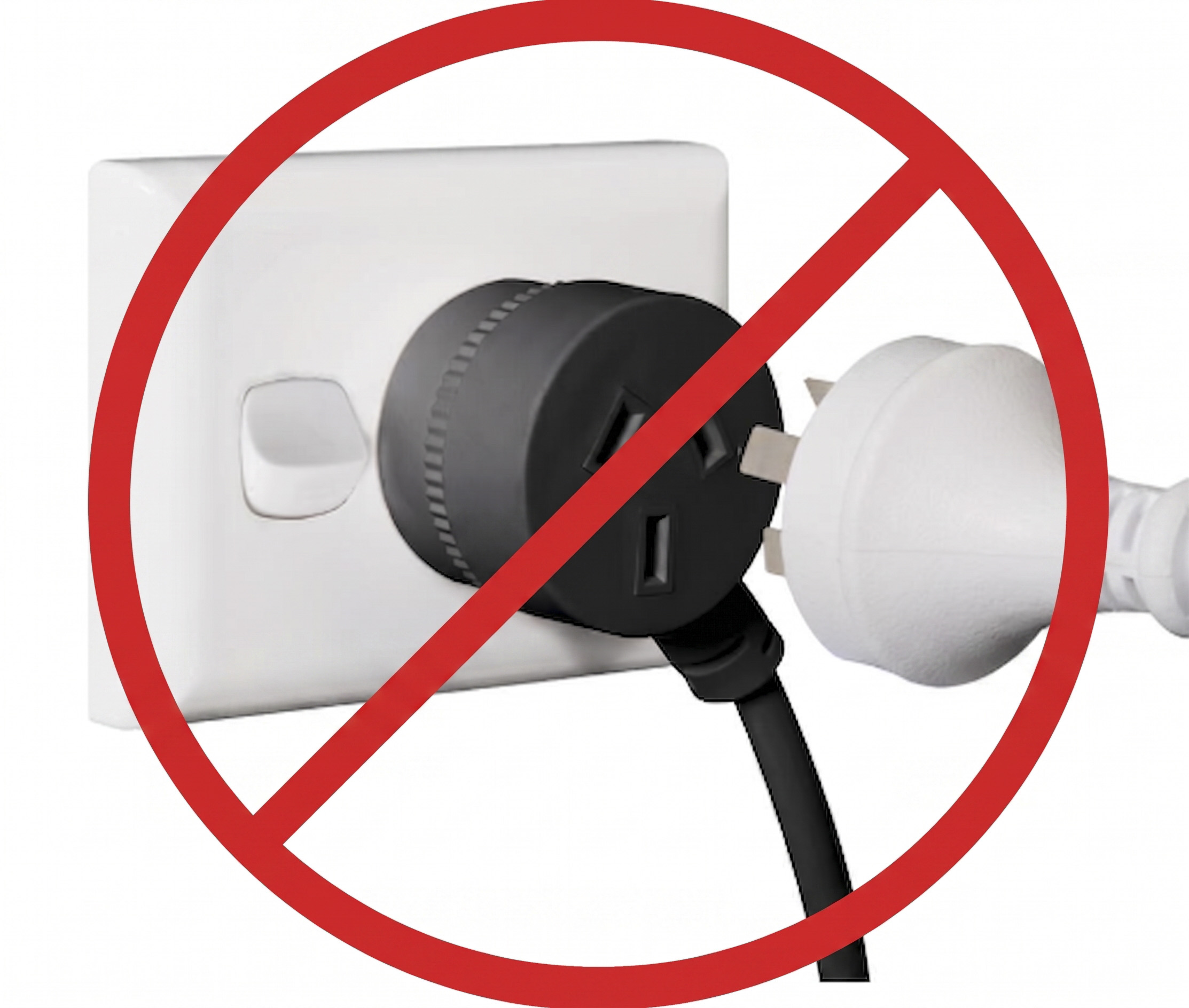
The requirement for independent inspection extends beyond standard IEC leads to all power cords, adaptors, and multi-plug devices. In commercial workplaces across NSW, the ACT, and QLD, double adaptors and piggyback plugs represent some of the most frequent safety breaches identified during site audits.
- Zero Overload Protection: No internal breaker to prevent wall socket fires.
- Mechanical Strain: Heavy cords pull pins out, exposing live 240V terminals.
- AS/NZS 3760 Action: Immediate visual check failure – must be removed from site.
- Thermal Cut-Out: Built-in reset button prevents socket overload.
- Individual Switches: Safe isolation of individual appliances.
- AS/NZS 3760 Action: Tested as an independent asset (Lead, Board, & Switches).
- Double Adaptors Prohibited Statewide: Under AS/NZS 3760:2022 and state WHS regulations (SafeWork NSW, WorkSafe ACT, and Workplace Health and Safety Queensland), double adaptors fail workplace visual inspections because they lack internal thermal overload protection and create excessive mechanical strain on wall sockets. They must be removed from commercial premises immediately and replaced with individually switched, overload-protected power boards.
- ⚠️ Piggyback Leads (Queensland Construction & High-Risk Rules): Under the Queensland Electrical Safety Regulation and AS/NZS 3012, the use of piggyback plugs and piggyback leads is strictly prohibited across all QLD construction, demolition, and trade workplaces. While AS/NZS 3760 permits piggyback cords under strictly limited commercial conditions in NSW and the ACT, Queensland safety inspectors enforce an absolute ban on active work sites – making them an immediate visual inspection failure during site audits in South East Queensland.
Need an On-Site Test & Tag inspection?
Speak directly with Grayden or Taylor to arrange a fast, trusted and certified workplace electrical Test and Tag inspection.
6. RETEST INTERVALS BY WORKPLACE ENVIRONMENT
Active building sites, demolition zones, civil works & portable site distribution boards (AS/NZS 3012).
Hostile operating environments: manufacturing plants, trade workshops & commercial kitchens.
General office suites, retail premises, medical consulting rooms & educational facilities.
Hotels, motels, boarding houses & hostels (subject to site risk assessment for guest turnover).
Enclosed, stationary environments: IT server racks, data cabinets & built-in commercial fridges.
Real-World Workplace Compliance Note: Under AS/NZS 3760 Table 2.1, a 5-year retest interval applies strictly to stationary equipment that is never exposed to flexing, movement, or environmental strain – such as locked IT data cabinets, server racks, and built-in commercial fridges. Because office monitors, computer leads, and power boards frequently get kicked, unplugged, relocated, or swapped between desks, Shock Busters adopts a 12-month retest schedule for general office environments based on these workplace risks to ensure ongoing audit compliance and team safety.
7. STATUTORY LEGAL OBLIGATIONS (WHS ACT & REGULATIONS)
Workplace electrical testing in Australia is a statutory duty under state and territory health and safety law:
- Work Health and Safety Act 2011 (Section 19): Mandates that a Person Conducting a Business or Undertaking (PCBU) holds a primary duty of care to maintain a safe work environment without electrical risks.
- WHS Regulations Part 4.7 (NSW & ACT) & QLD Electrical Safety Regulation 2013: Require PCBUs to ensure workplace electrical equipment is inspected and tested regularly by a competent person. State regulators – SafeWork NSW, WorkSafe ACT, and the QLD Electrical Safety Office (ESO) – enforce AS/NZS 3760 as the required standard during workplace compliance audits.
- Why Businesses Must Test and Tag: Testing and Tagging is not just a statutory task; it is a business’s evidence of Duty of Care. Digital reporting and durable compliance tags provide legal proof of due diligence during a workplace audit or incident investigation. Regular inspection protects officers and owners from personal liability, helps prevent commercial insurance claim rejections following an electrical fire, and stops faulty appliances from causing costly operational downtime or tripping workplace RCDs.
8. SAVE TIME: COMBINE YOUR SAFETY AUDITS (NSW & ACT)
Why manage and pay for different contractors when we can handle your complete compliance suite in one seamless visit?
When Shock Busters attends your site across all of NSW (including Regional NSW) and the ACT, we can complete your electrical test and tag, fire extinguisher, fire blankets, fire hose reel inspections, and emergency exit light testing at the exact same time.
(Note: For our Queensland clients, Shock Busters specialises strictly in electrical Test and Tag compliance across South and South-East Queensland. While we focus purely on electrical asset testing in QLD, fire equipment and smoke alarm services are not included at this time – Electrical Contractor Licence: #1510173).
- One appointment instead of scheduling multiple site visits.
- Staggered testing so your workplace operations keep moving.
- One clear invoice and a complete set of digital compliance records.
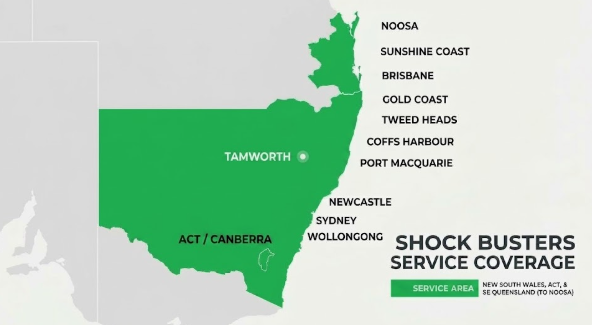
Our Complete Regional & Metro Service Footprint
Shock Busters provides mobile compliance testing across major cities, regional hubs, and industrial precincts, servicing commercial, industrial, trade, and government sites across All of NSW, the ACT, and South Queensland:
|
|
Ready to Book Your Test and Tag Inspection?
Get in touch with Grayden, Taylor, and the Shock Busters team today for a hassle-free quote and fast mobile compliance service across All of NSW, the ACT, and South QLD.