WHAT CHANGED IN FEBRUARY 2026? MANDATORY AS 1851 FIRE SAFETY IN NSW
Key Compliance Summary: On 13 February 2026, updated state regulations under the Environmental Planning and Assessment (Development Certification and Fire Safety) Regulation came into full effect across New South Wales. Routine servicing of essential fire protection equipment under AS 1851-2012 (and AS/NZS 2293.2 for emergency exit lighting) is a mandatory requirement for all Class 1b through Class 9 commercial and multi-occupancy properties.
Failing to maintain compliant equipment tags, service schedules, and inspection reports exposes building owners to statutory maximum penalties of up to $66,000 for corporations and $13,200 for individuals.
In this blog post, Shock Busters outlines the changes that took effect in February 2026, which building classifications are captured, what they mean for building owners across NSW and the ACT, and the exact steps required to remain audit-proof.
1. THE FEBRUARY 2026 CHANGES EXPLAINED
Prior to 13 February 2026, many building owners relied on custom service schedules, basic visual checks, or legacy maintenance regimes. The 2026 update removed this ambiguity by formally embedding AS 1851-2012 (Routine service of fire protection systems and equipment) directly into NSW building regulations.
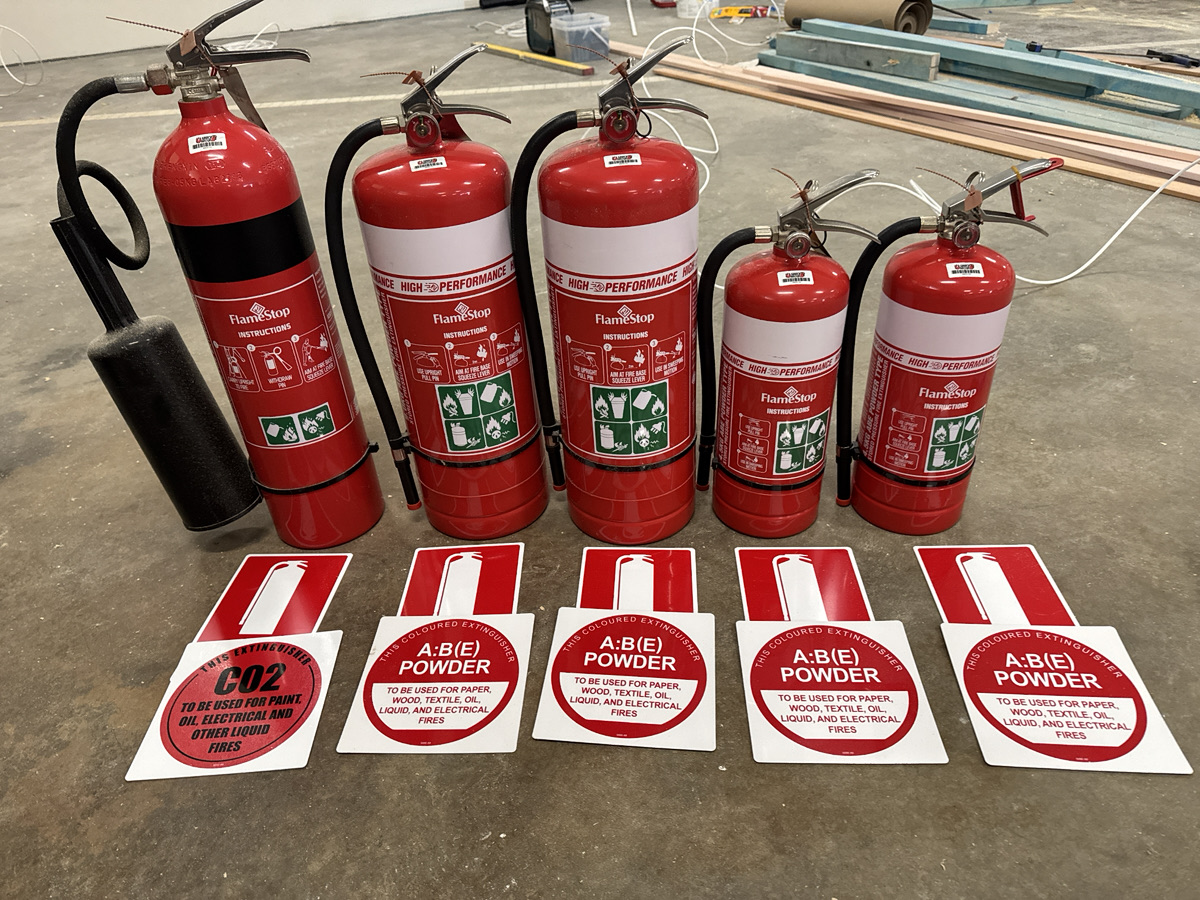
Whether your workplace is located in Sydney, Newcastle, Wollongong, the Central Coast, or major regional hubs across Northern NSW, Southern NSW, the Central West, Riverina, and the ACT, your essential fire protection equipment – including portable fire extinguishers, fire blankets, fire hose reels, and emergency exit lighting – must now strictly adhere to mandatory AS 1851 and AS/NZS 2293.2 inspection and testing routines.
(NSW EPA Development Certification and Fire Safety Regulation)
Before the 2026 reform, NSW regulations legally allowed building owners to maintain fire measures to “a standard no less than when the measure was originally installed” (or to the historical version listed on their Fire Safety Schedule). Because older NSW premises were built under vastly different codes – ranging from legacy multi-part standards like AS 1851.1-1995 to the consolidated AS 1851-2005 – compliance across the state was fragmented.
The February 2026 amendment officially abolished these legacy benchmarks and made AS 1851-2012 the mandatory uniform legal standard across all Class 1b–9 buildings, regardless of construction year.
Under the updated regulation, failing to maintain essential fire measures carries maximum court-imposed fines of up to $66,000 for corporations (600 penalty units) and $13,200 for individuals/sole traders (120 penalty units). Failing to produce up-to-date inspection reports or asset registers during an audit carries additional maximum penalties of up to $33,000 for corporations and $6,600 for individuals. Local councils and Fire and Rescue NSW (FRNSW) actively audit these registers during routine inspections.
2. WHICH BUILDING CLASSES ARE COVERED BY THE 2026 REFORMS?
The 13 February 2026 mandate applies across all commercial, industrial, public, and multi-occupancy building classifications defined under the Australian National Construction Code (NCC).
Private Class 1a single residential homes are exempt, but all Class 1b through Class 9 premises are bound by AS 1851-2012:
| NCC Building Class | Description & Typical Examples | Compliance Status |
|---|---|---|
| Class 1b | Small boarding houses, guest houses, hostels (<300m² / <12 beds), or holiday accommodation blocks. | MANDATORY |
| Class 2 | Multi-unit residential apartment complexes, flats, and strata developments (common area measures). | MANDATORY |
| Class 3 | Commercial accommodation: hotels, motels, large boarding houses, backpackers, student dorms, and worker quarters. | MANDATORY |
| Class 4 | Single residential dwelling located inside a commercial or industrial building (e.g., caretaker’s flat). | MANDATORY |
| Class 5 | Commercial office buildings, professional suites, government offices, and consulting rooms. | MANDATORY |
| Class 6 | Retail premises: shops, shopping centres, restaurants, cafés, bars, service stations, and showrooms. | MANDATORY |
| Class 7a & 7b | Multi-storey parking stations (7a), wholesale storage warehouses, and distribution facilities (7b). | MANDATORY |
| Class 8 | Industrial premises: factories, mechanic workshops, processing plants, laboratories, and trade sites. | MANDATORY |
| Class 9a, 9b, 9c | Healthcare/hospitals (9a), schools, childcare centres, halls (9b), and residential aged care homes (9c). | MANDATORY |
(Under AS 1851-2012, AS/NZS 2293.2, and NSW Moveable Dwellings Regulations)
Essential fire equipment across holiday parks, regional retreats, and temporary worker accommodation (including demountables or picker cabins) falls strictly under mandatory 6-monthly inspection cycles.
This covers all site hose reels, communal area extinguishers, emergency lighting in shared amenities, and fire safety equipment inside park-owned accommodation units.
3. AS 1851 & AS/NZS 2293 ROUTINE SERVICE INTERVALS EXPLAINED
Under AS 1851-2012 (and AS/NZS 2293.2 for exit lighting), essential fire measures are subjected to structured, time-based testing regimes to ensure they remain fully operational in an emergency. Each piece of equipment requires specific actions at 6-monthly and 12-monthly intervals:
6-Monthly Routine Inspections
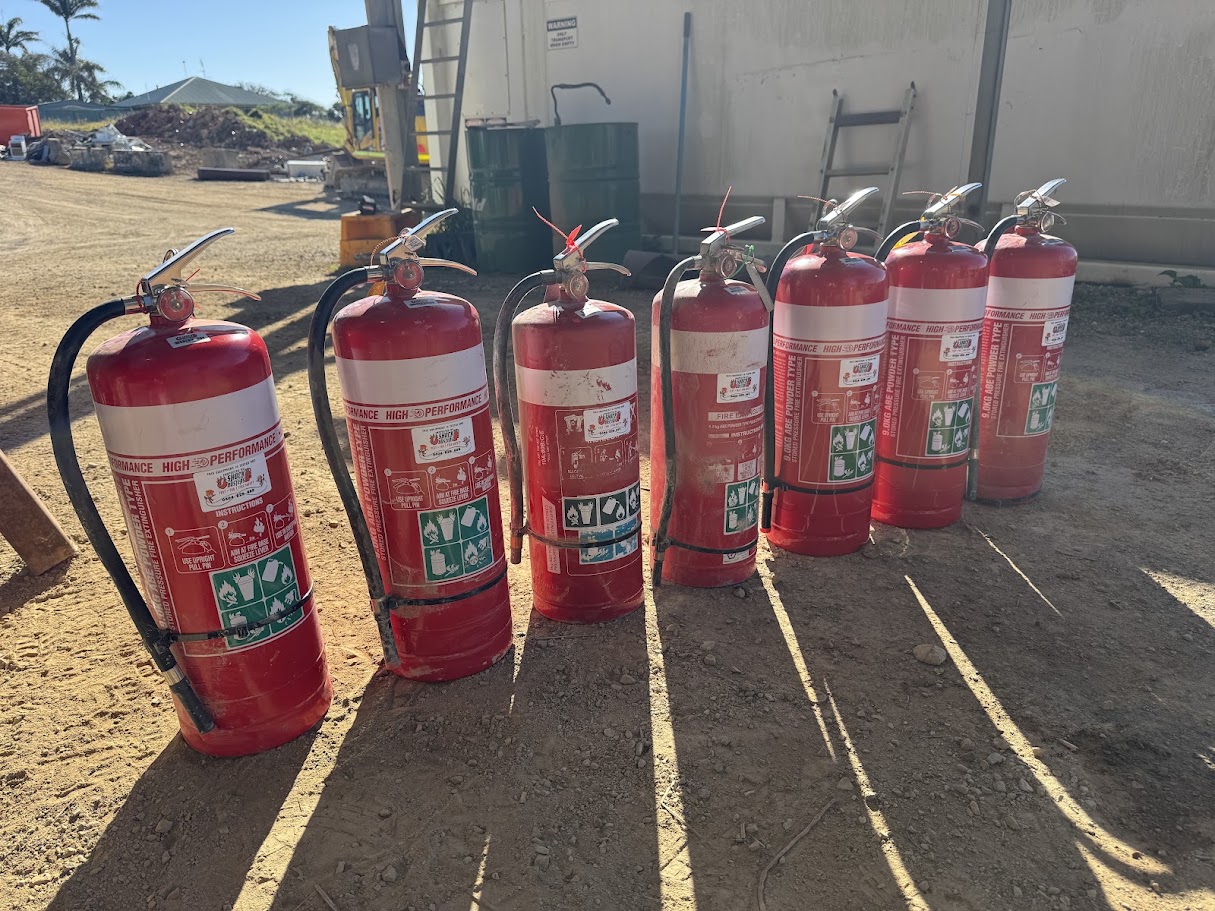
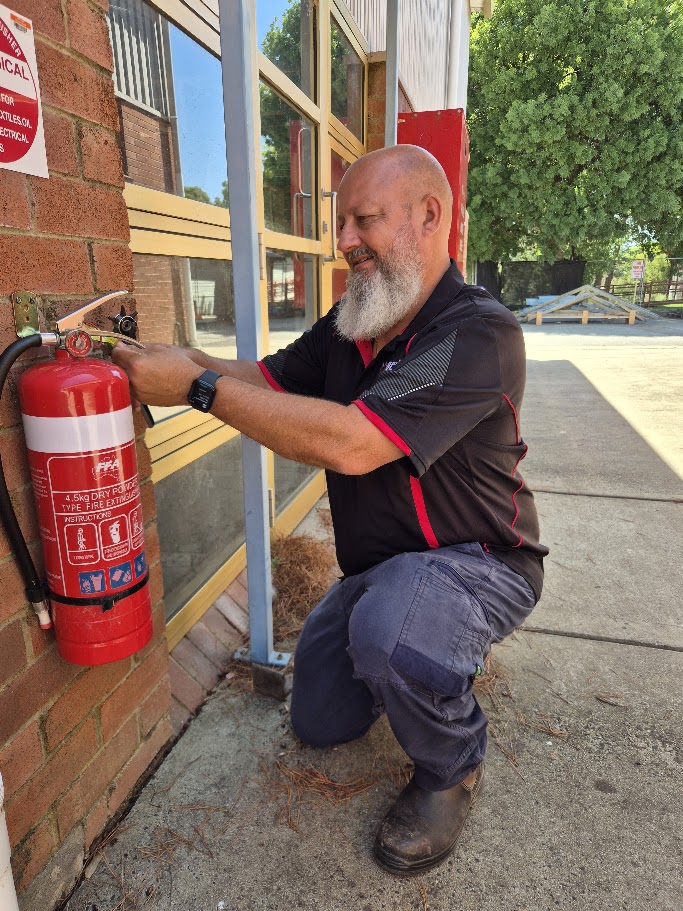
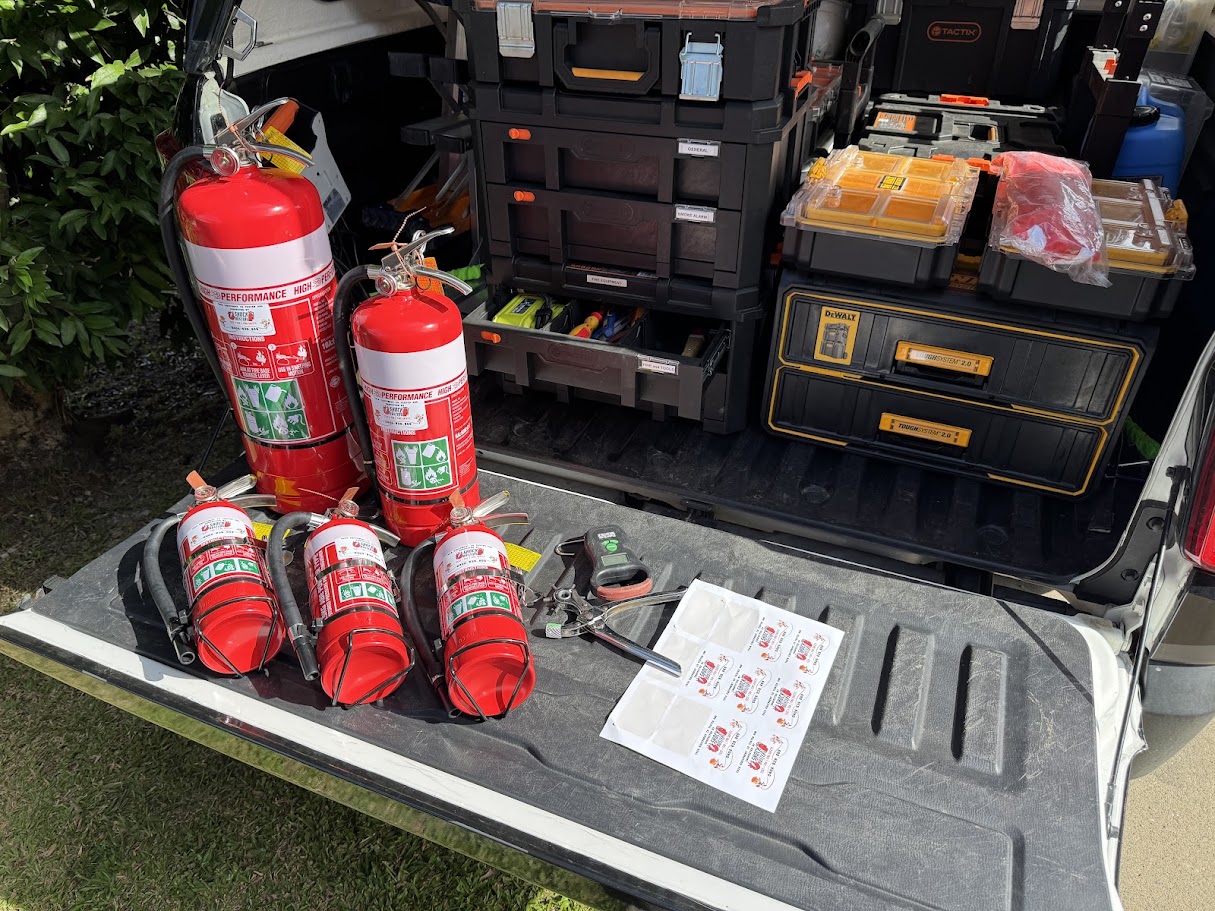
- Portable Extinguishers: Technicians perform visual and physical checks on every unit.
This includes verifying clear access and location signage, inspecting tamper seals and safety pins, ensuring pressure gauges sit in the green operating zone, checking hoses and nozzles for blockages or cracks, and inspecting cylinders for corrosion or damage. (Note: Carbon Dioxide (CO₂) extinguishers lack pressure gauges and must be weighed 6-monthly to verify gas mass). - Fire Blankets: Checked for clear mounting height, container accessibility, quick-release pull tab integrity, cleanliness, and correct folding.
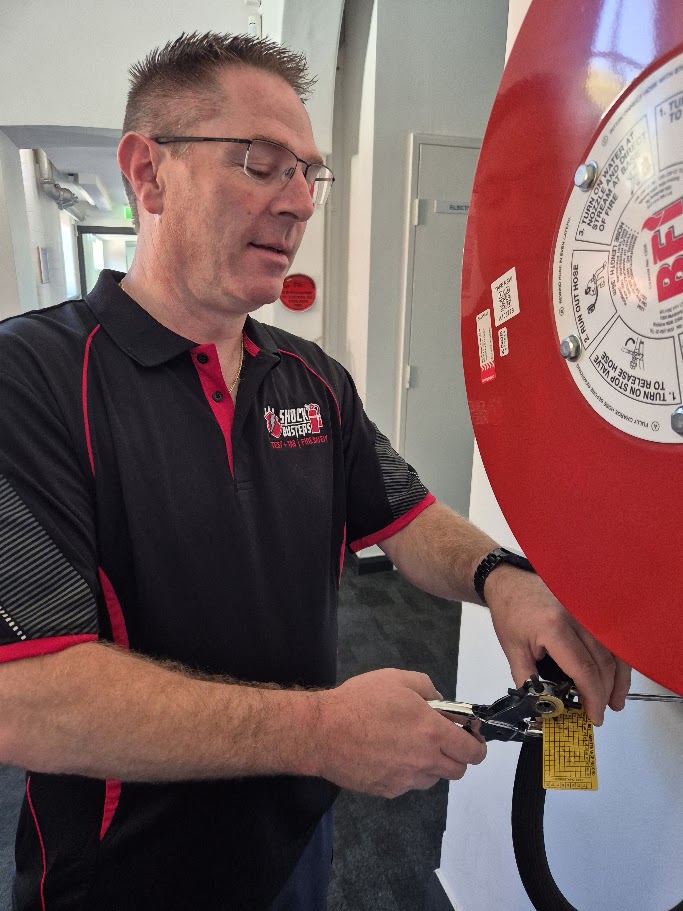
- Fire Hose Reels: Inspected for unobstructed access, smooth drum rotation, hose material integrity, nozzle isolation valve operation, and guide arm functionality.
- Emergency Exit Lighting (AS/NZS 2293.2): Undergoes a mandatory 6-monthly 90-minute battery discharge test. Mains power to the emergency lighting circuit is isolated for a full 90 minutes to ensure all exit signs and emergency luminaires remain lit for the required duration.
12-Monthly Routine Servicing & Flow Testing
- Portable Extinguishers: Includes all 6-monthly checks plus a comprehensive mechanical inspection. Stored-Pressure extinguishers are weighed to verify full charge mass against stamped tare weight, discharge mechanisms are tested, and site hazard suitability is re-assessed.
- Fire Hose Reels: Undergoes an annual operational flow test. Technicians fully unwind the hose, inspect all working parts for leaks, measure water flow rate (in L/sec), and verify nozzle spray patterns.
ROUTINE SERVICE MATRIX
| Equipment Type | Applicable Standard | 6-Monthly Routine Actions | 12-Monthly Routine Actions |
|---|---|---|---|
| Portable Extinguishers (Stored-Pressure) |
AS 1851 (Section 10) |
Visual & physical check: accessibility, signage, tamper seal/pin, pressure gauge in green, hose/nozzle integrity, and corrosion check. | All 6-monthly checks + full weight/charge verification against tare weight, mechanical operating check, and risk assessment. |
| Portable Extinguishers (CO₂ / Cartridge) |
AS 1851 (Section 10) |
Visual/physical check + mandatory 6-monthly weighing to verify gas charge (no pressure gauge fitted). | All 6-monthly checks + detailed mechanical inspection and site hazard suitability check. |
| Fire Blankets | AS 1851 (Section 11) |
Visual check: container condition, clear mounting height, quick-release pull tab integrity, and blanket folding/cleanliness. | Re-confirmed during 6-monthly cycle; replaced immediately if damaged, used, or contaminated. |
| Fire Hose Reels | AS 1851 (Section 9) |
Visual check: unobstructed access, drum rotation, hose condition, nozzle isolation valve, and guide arm operation. | All 6-monthly checks + annual operational flow test (verifying water supply, and flow rate). |
| Emergency Exit Lighting | AS/NZS 2293.2 | Mandatory 90-minute battery discharge test (isolating power circuit to ensure 90-min illumination). | All 6-monthly checks + fitting cleaning, diffuser inspection, and lamp replacement. |
AS 1851 DEFECT CLASSIFICATION CATEGORIES
Under Clause 1.17.1 of AS 1851-2012, service technicians are legally required to categorize any system fault into one of three standardized definitions during routine testing. Understanding these classifications helps building managers prioritize repairs before an annual AFSS endorsement:
| Defect Classification | AS 1851 Standard Definition | Typical Site Examples | Required Owner Action |
|---|---|---|---|
| Critical Defect | A system fault or failure that renders the fire protection measure completely inoperative or severely impairs its intended life safety function. | Depressurised fire extinguisher, cracked hose reel nozzle, or emergency exit light failing 90-min battery discharge test. | Immediate rectification required. Invalidates compliance status until fixed. |
| Non-Critical Defect | A fault or component wear that adversely affects an asset but is not likely to render the overall fire protection system inoperative in an emergency. | Minor surface rust on an extinguisher mounting bracket, stiff hose reel drum rotation, or missing plastic tamper seal pin. | Schedule for repair during regular site maintenance cycles. |
| Non-Conformance | A missing or incorrect feature that does not affect equipment operation, but deviates from installation standards or impedes routine servicing. | Faded or missing location ID signage, pallets/furniture blocking access to an extinguisher, or missing/outdated evacuation diagrams. | Clear obstructions, replace missing signage, or update site diagrams to restore compliance. |
Mandatory Annual Documentation
Regardless of equipment type, Clause 1.17.2 of AS 1851-2012 mandates that building owners must be issued an official Yearly Condition Report. This document summarizes all completed 6-monthly and 12-monthly routine checks, details any unresolved critical defects, non-critical defects, or non-conformances, and certifies site baseline compliance.
4. SUMMARY OF THE FEBRUARY 2026 CHANGES
| Compliance Factor | Legal Rule BEFORE 13 February 2026 | Mandatory POST-Feb 2026 Rule (NSW Regulation) |
|---|---|---|
| Maintenance Baseline | Maintained to the building’s original installation standard (e.g., legacy AS 1851 versions or historical Fire Safety Schedules). | Mandatory compliance with AS 1851-2012 across all Class 1b-9 buildings, regardless of construction year. |
| AFSS Verification | Routine servicing followed historical maintenance regimes tied to the building’s original construction date. | AFSS endorsement now requires AS 1851-2012 routine servicing proof, while baseline system design performance remains tied to the building’s approved schedule. |
| Record Retention | Maintenance records retained per general commercial practice (often 1–2 years on invoices). | Mandatory 7-year retention of digital routine servicing reports and Yearly Condition Reports. |
| Missed Service Protocol | No statutory timeframe to log or report missed routine inspections. | Mandatory formal logging of missed servicing within 5 business days in the inspection register. |
| Defect Classification | Defect definitions were up to individual contractor terms or informal quotes. | Standardized AS 1851 defect classification (Critical Defect, Non-Critical Defect, Non-Conformance). |
| Enforcement Fines | General compliance notices with variable enforcement limits. | Direct statutory maximum fines up to $66,000 for corporations and $13,200 for individuals for non-compliant maintenance or missing reports. |
5. HOW THE 2026 REFORMS DIRECTLY AFFECT BUSINESS OWNERS
- Stamped Tags + Mandatory Asset Reports: Physical service tags attached to extinguishers, hose reels, and blankets must be stamped with the specific service type number in the relevant month slot. Under NSW regulations, a stamped tag alone is not sufficient – it must be backed by a full digital asset report archived for the mandatory 7-year retention period.
- Strict Routine Frequencies & Testing Rules: Portable fire assets require documented 6-monthly inspections, stored-pressure extinguishers undergo annual weighing, hose reels require annual flow testing, and emergency exit lights require 6-monthly 90-minute battery discharge testing under AS/NZS 2293.2.
- Formal Missed-Service Logging: If access to a tenant space or room is blocked during an audit, AS 1851 mandates that the missed service must be formally logged in your inspection register within 5 business days.
- Immediate Defect Rectification: When a “Critical Defect” is identified (e.g., a depressurised extinguisher, leaking hose reel, or failed exit light battery), the business owner must rectify the fault promptly. Unresolved critical defects invalidate your compliance status and risk insurance claim rejections.
(Under AS 3745-2010 and AS 1851-2012 Section 13)
Emergency evacuation diagrams aren’t a “set and forget” item. Australian Standard AS 3745 mandates that site evacuation diagrams must undergo a mandatory review and update at least every 5 years – or immediately following any structural renovation, wall layout change, or exit pathway modification. Under AS 1851 Section 13, technicians must also perform 6-monthly visual checks to verify that diagrams are correctly oriented (“You Are Here”), clearly visible, and free from obstructions.
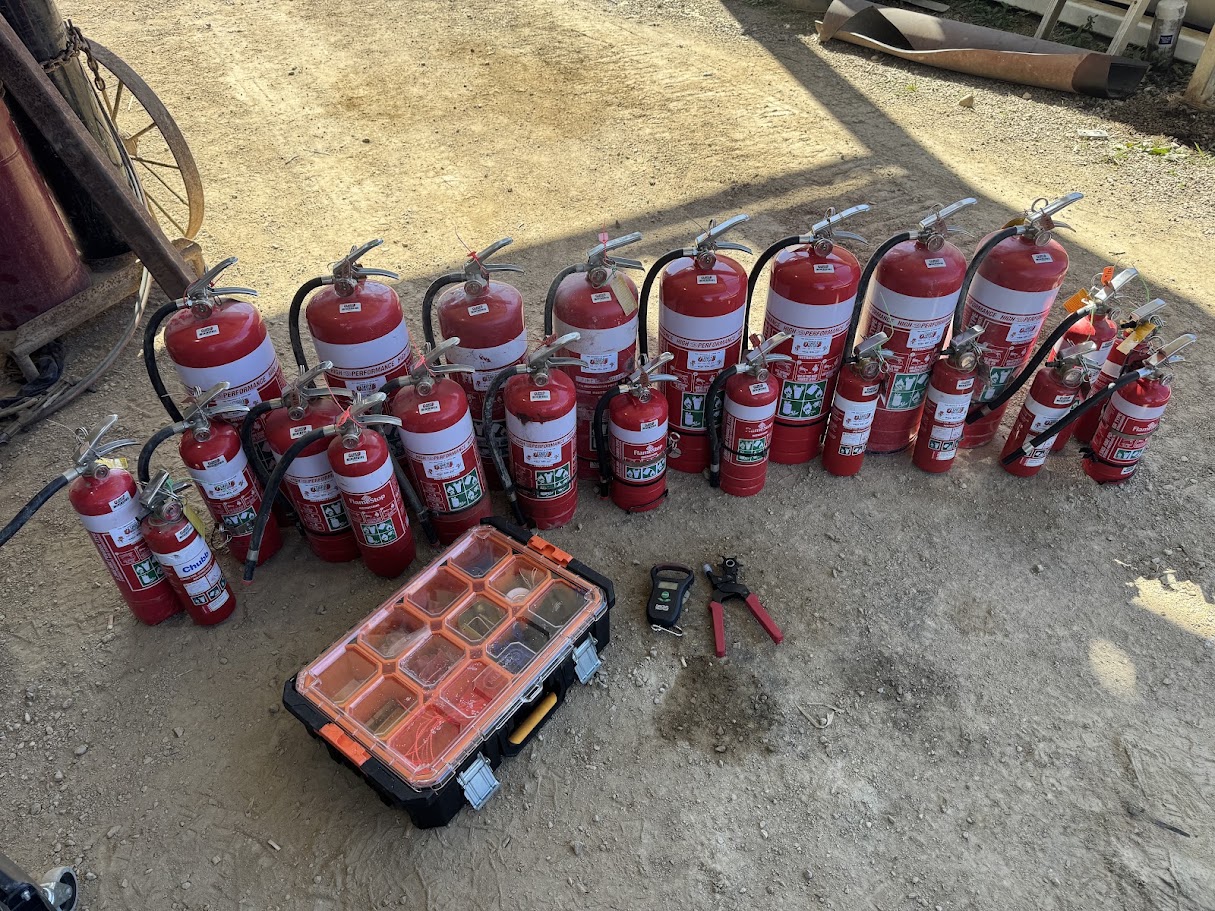
Our certified technicians carry out complete on-site inspection, testing, and tagging across all core essential fire equipment – including fire extinguishers, fire blankets, fire hose reels, emergency exit lights, and emergency lights. Every service includes physical tag stamping and full digital reporting to keep your site 100% compliant with AS 1851 and AS/NZS 2293.2.
The Shock Busters Advantage – Streamline Your Compliance:
Managing separate contractors for electrical test & tag (AS/NZS 3760) and fire safety (AS 1851 / AS 2293.2) leads to double call-out fees and scheduling headaches.
Shock Busters completes your entire fire and electrical compliance suite in a single visit across NSW – keeping your site 100% compliant, audit-ready, and fully protected, backed by stamped tags and digital reporting archived for 7 years.
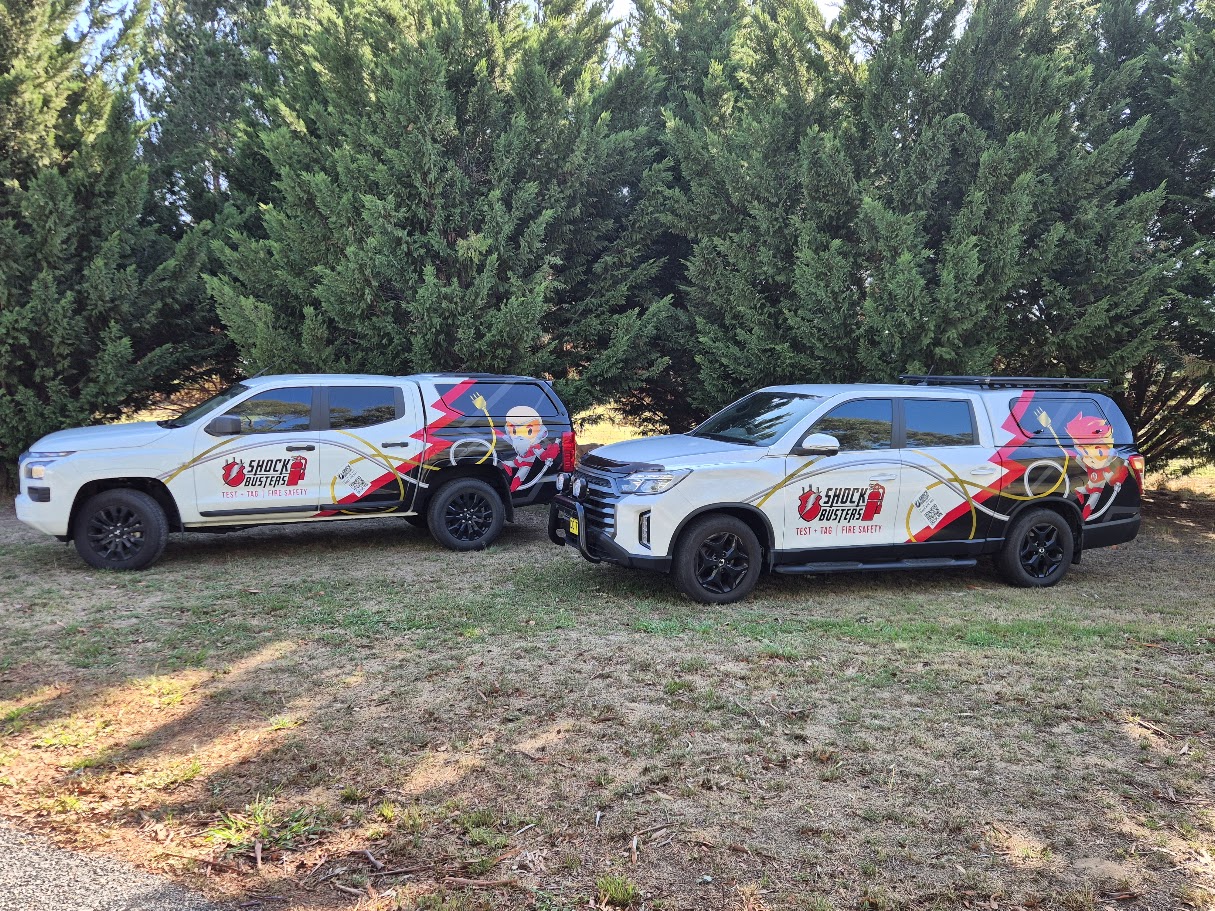
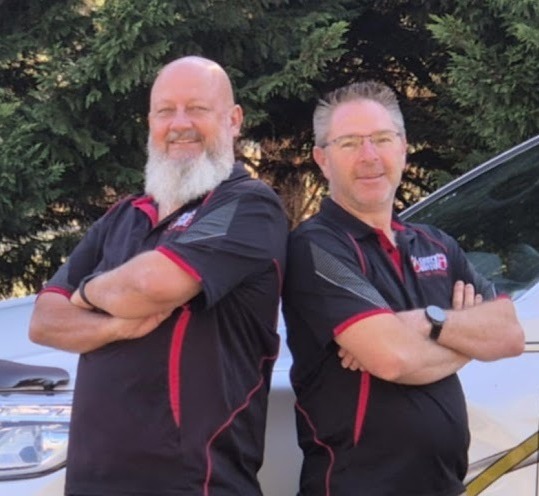
NEED LOCAL AS 1851 ON-SITE TESTING? SHOCK BUSTERS HAS MOBILE COVERAGE ACROSS NSW & ACT
Shock Busters provides mobile compliance testing across commercial buildings, industrial facilities, trade workshops, and corporate sites throughout all major metro cities, regional hubs, and industrial precincts in NSW and the ACT:
- Greater Sydney & Metros: Sydney, Western Sydney, Parramatta, Penrith, Liverpool, Campbelltown, Blacktown & Hills District
- Hunter, Central Coast & Newcastle: Newcastle, Maitland, Cessnock, Singleton, Muswellbrook, Gosford, Wyong & Lake Macquarie
- Illawarra, Shoalhaven & South Coast: Wollongong, Shellharbour, Kiama, Nowra, Ulladulla, Batemans Bay, Bega & Eden
- Northern Rivers & Mid North Coast: Tweed Heads, Kingscliff, Murwillumbah, Byron Bay, Ballina, Lismore, Casino, Grafton, Coffs Harbour, Port Macquarie, Kempsey & Taree
- Central West & Orana: Orange, Bathurst, Dubbo, Mudgee, Parkes, Forbes, Cowra, Lithgow & Broken Hill
- New England & North West: Tamworth, Armidale, Inverell, Moree, Gunnedah & Glen Innes
- Riverina & Murray Regions: Wagga Wagga, Albury, Griffith, Leeton & Deniliquin
- Southern Highlands, Tablelands & ACT: Canberra CBD, Fyshwick, Mitchell, Queanbeyan, Goulburn, Bowral, Mittagong & Young
ℹ️ Disclaimer & Statutory Notice: The information provided in this article is for general educational and informational purposes only and does not constitute formal legal, regulatory, or fire engineering advice. Compliance requirements under AS 1851, AS/NZS 2293.2, and the NSW Environmental Planning and Assessment Regulation can vary based on individual building classifications, Fire Safety Schedules, and site-specific performance solutions. Statutory penalties mentioned reflect maximum court-enforceable limits under NSW regulation for corporations and individuals. For formal assessment and site certification, please contact Shock Busters for a professional on-site compliance inspection.